Exploring the Possibility: Could CERN Have Altered the Timeline? A Scientific Perspective
In popular culture, stories of time manipulation and alternate realities often capture our imagination. Recently, some theorists suggest that the European Organization for Nuclear Research (CERN) might have unintentionally altered our universe’s timeline during its experimental endeavors. While this notion sounds sensational, a closer look at the underlying physics reveals compelling reasons to consider that such a disruption could, in fact, be consistent with current scientific understanding—albeit in a highly speculative context.
The Mandela Effect: Collective False Memories and Reality
One phenomenon that fuels speculation is the so-called Mandela Effect—the widespread false memory of events or details. For instance, many people distinctly recall Darth Vader’s iconic line as “Luke, I am your father,” when, in reality, the line is “No. I am your father.” Similarly, many remember the Oscar-winning moment when Sally Field passionately exclaimed, “You like me! You really like me!”, although the actual quote was different. Such shared misrememberings challenge our understanding of reality and have led some to ponder whether alternate timelines or parallel universes influence collective memory.
CERN’s Timeline and Quantum Mechanics
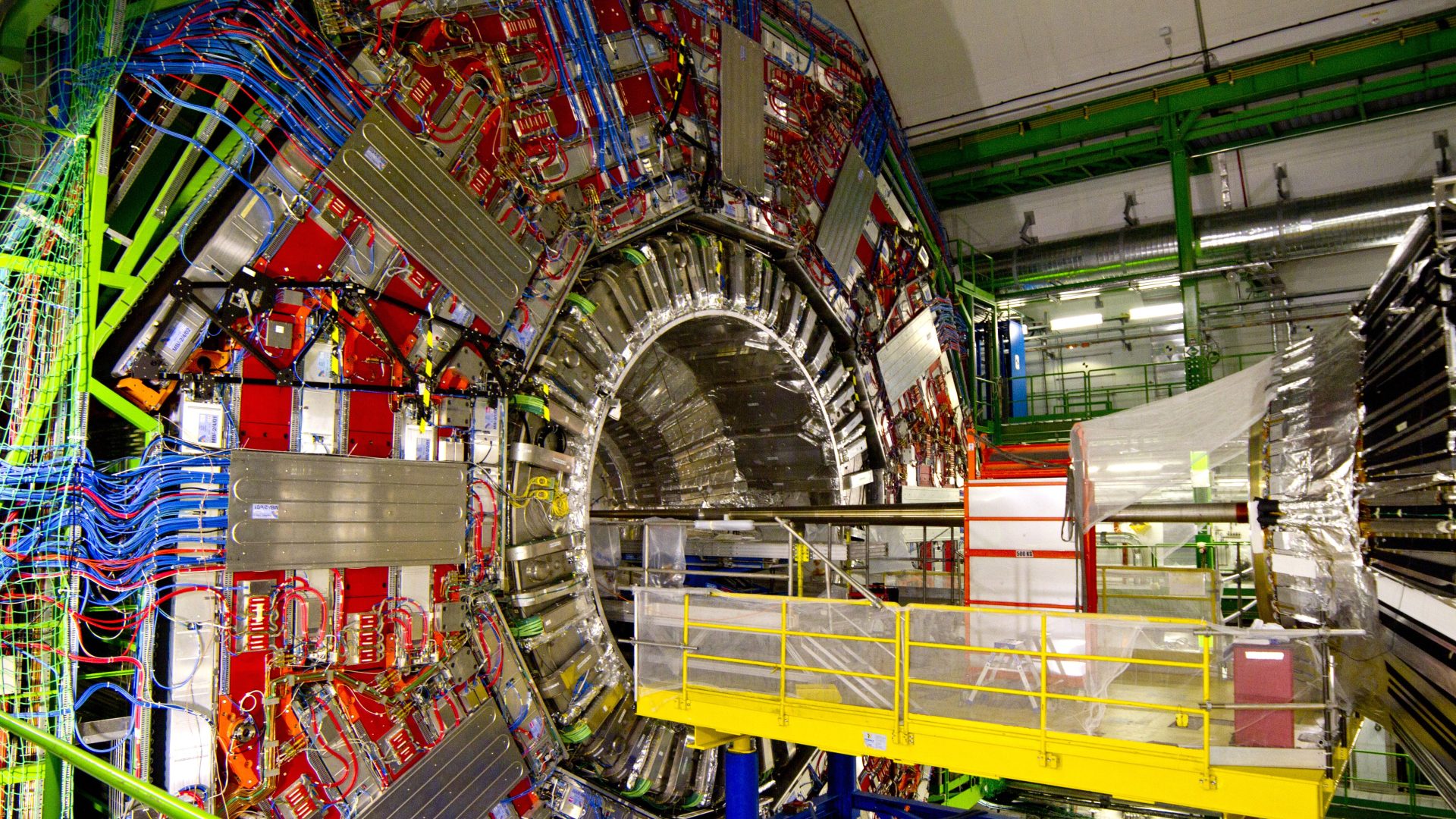
CERN’s Large Hadron Collider (LHC) officially began operations with the first beam in September 2008. The project experienced a notable incident during initial testing—a magnet failure, helium venting, and a subsequent nine-day shutdown before restart in November 2009. These documented events, supported by CERN’s publicly available records, mark the timeline of high-energy physics experiments that have pushed the boundaries of our understanding.
Interestingly, some theorists posit that the extreme energy conditions within the collider might have unintended consequences, such as creating or interacting with “brane” structures—concepts from advanced string theory models. The Ekpyrotic universe model, for example, suggests our universe resulted from a collision between higher-dimensional membranes (branes). Such collisions could theoretically generate ripple effects, potentially impacting the fabric of spacetime and, by extension, our perceived reality.
The Ekpyrotic Model and Parallel Universes
Developed by physicists like Paul Steinhardt, the Ekpyrotic model proposes that our universe’s origin is rooted in a collision between branes in higher-dimensional space. This theory aligns with the multiverse concept, where multiple universes exist in a hierarchy of different realities. Brian Greene’s elaboration on the brane multiverse explores how different “p
0 thoughts on “We Think CERN Broke the Timeline. Here’s Why the Physics Actually Supports It.”