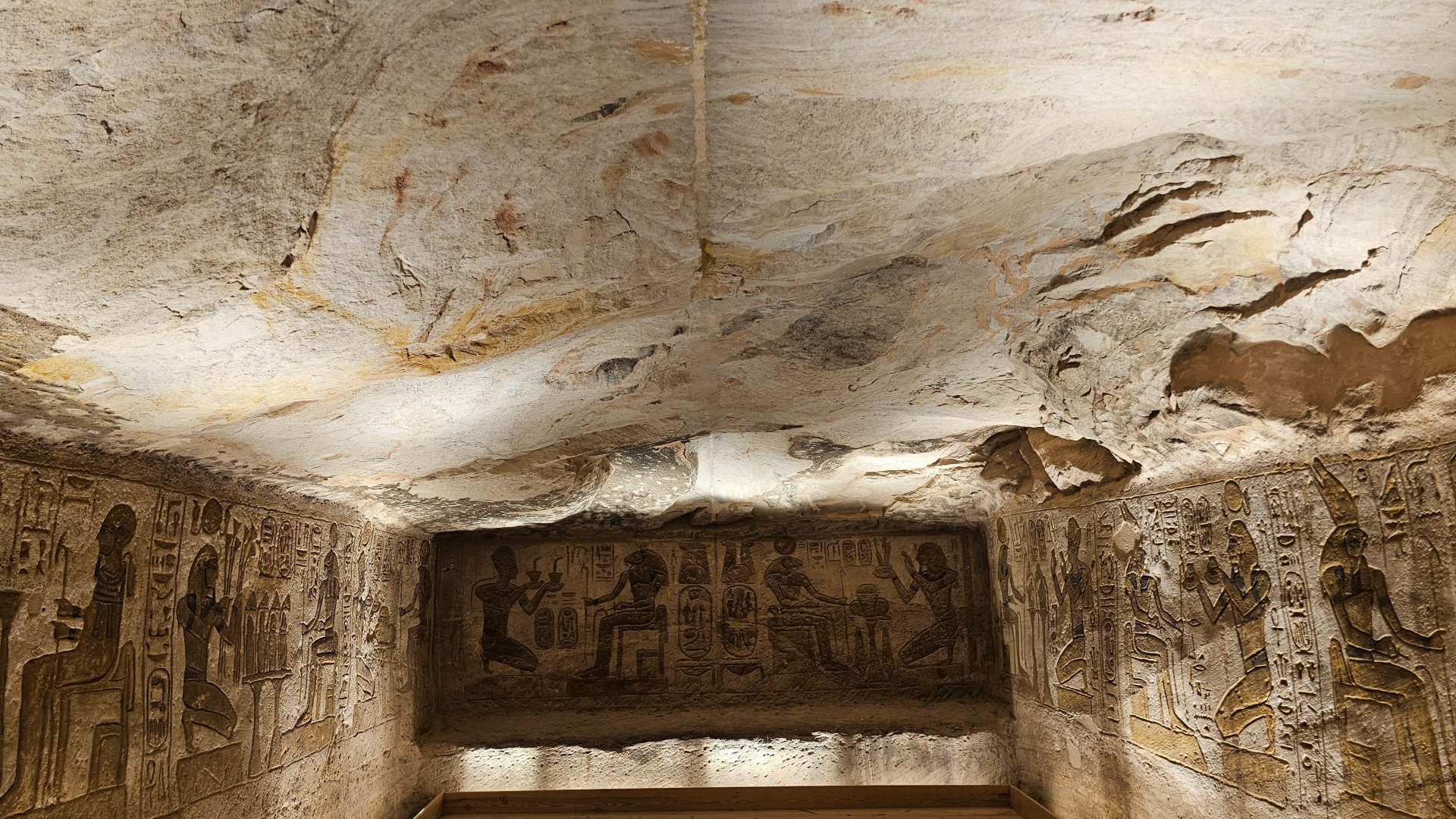
Satellite Imagery Reveals Potential Hidden Structures in Egypt, Including a Mysterious Massive Library
Recent advancements in satellite technology have enabled researchers to peer beneath Egypt’s desert sands, uncovering intriguing anomalies that may point to the existence of an ancient, previously undiscovered complex. Notably, analyses of satellite scans have brought renewed attention to the legendary “Labyrinth of Egypt,” a colossal subterranean structure described by ancient historian Herodotus.
Discovery of Anomalous Features via Satellite Imaging
Utilizing high-resolution satellite imagery, researchers have identified several anomalies in the Egyptian landscape that could correspond to archaeological sites of significant historical value. Among these is a striking, centrally located, freestanding object approximately 40 meters in length. The feature appears metallic in nature—distinct from the surrounding stone or wooden structures—and bears a shape reminiscent of a Tic Tac mint, leading to speculation about its origin and purpose.
This discovery aligns with descriptions from Herodotus, who documented a vast complex comprising multiple chambers—reported to be as many as three thousand—half of which are situated underground. According to ancient records, the Egyptian caretakers were reluctant to reveal the full extent of these chambers, fueling speculation about their contents and purpose.
The Legendary ‘Labyrinth’ and Its Potential Significance
The ancient Greek historian Herodotus detailed that the Egyptian labyrinth consisted of both above-ground and subterranean chambers, suggesting a complex purpose that may have included a vast library or storehouse of knowledge. The mention of a 3,000-chamber structure, alongside the mysterious central metallic object, raises intriguing questions about the scope and contents of this legendary site.
Despite the allure of these discoveries, official narratives often dismiss or obscure such findings. Historically, government authorities and archaeological institutions have been cautious in releasing satellite imagery that might challenge established narratives regarding Egyptian antiquities—particularly concerning the construction and purpose of the pyramids. There is a long-standing tension between open exploration and strict national security protocols.
Censorship and the Silence Surrounding Egyptian Antiquities
In previous instances, satellite imagery revealing potential undiscovered features beneath Egyptian pyramids was met with suppression. Researchers who attempted to share or further analyze such data faced restrictions; foreign teams conducting scans under the pyramids were reportedly blacklisted or asked to cease operations, despite the proven efficacy of the technology.
The reluctance to disclose these findings has fueled speculation that certain knowledge about Egypt’s ancient structures remains hidden from the public. Critics argue that such secrecy hampers historical understanding and may
0 thoughts on “Sattelites scans of Egypt may have revealed the location of the ‘Labyrinth of Egypt’, a massive, 3000 chamber library including a metal ‘tictac’ shaped object about 40m long.”