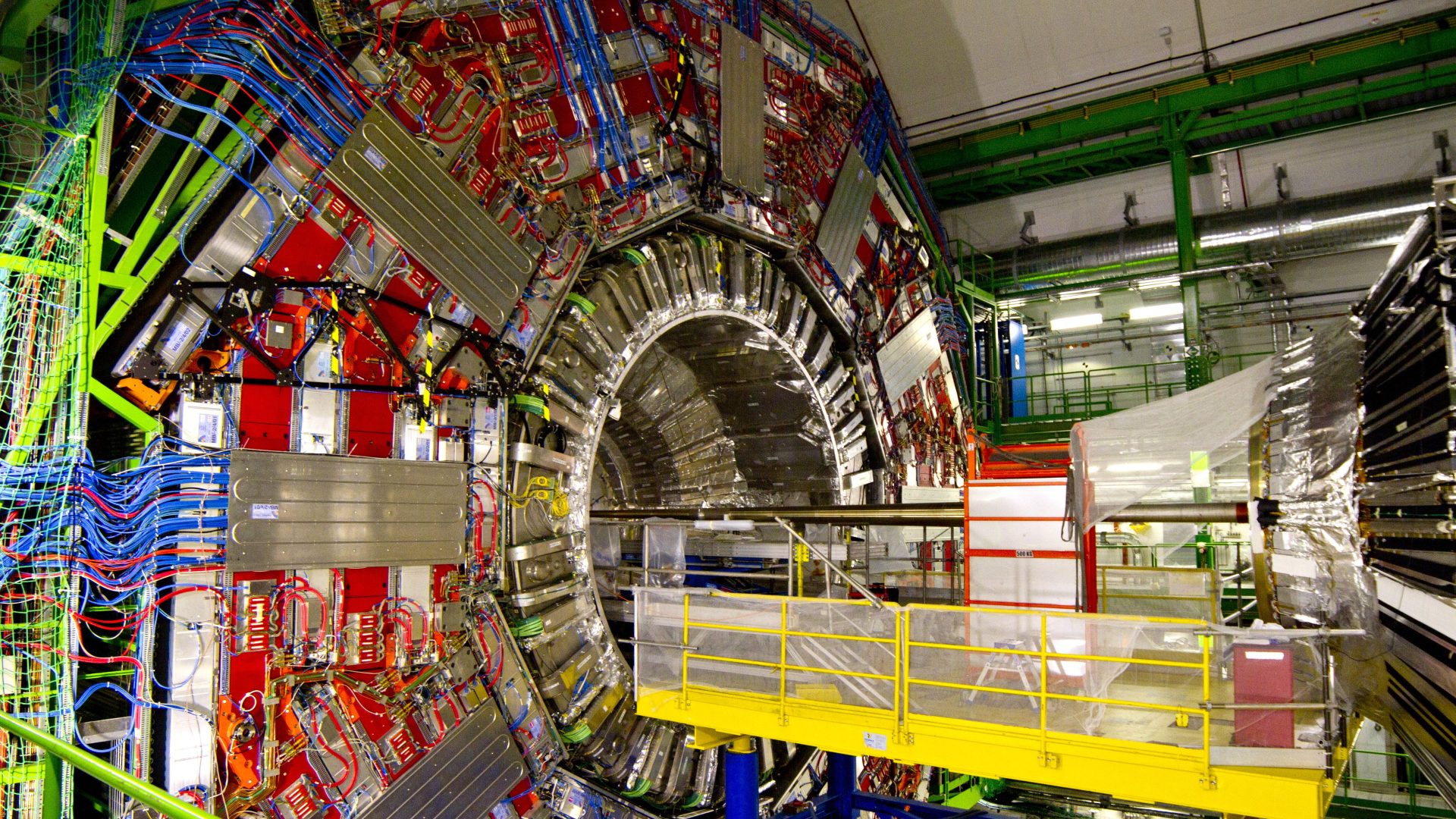
Exploring the Potential Impact of CERN Experiments on the Fabric of Reality
Recent discussions have sparked curiosity and concern regarding the capabilities of high-energy physics experiments conducted at CERN’s Large Hadron Collider (LHC). Some theorists propose that these experiments may have caused, or are capable of causing, a disturbance in the very timeline of our universe. While mainstream science maintains the safety and purpose of CERN’s endeavors, emerging perspectives suggest that certain physics models lend some credibility to the idea that such experiments could influence the fabric of reality itself.
The Curious Nature of Memory and the Mandela Effect
Before delving into complex theories, it’s worth reflecting on a phenomenon many are familiar with: the Mandela Effect. This occurs when large groups of people share false memories about past events—like recalling Darth Vader’s iconic line as “Luke, I am your father,” when in reality, the phrase is “No, I am your father.” Such discrepancies highlight how our memories are not infallible and may be influenced by various factors, including altered perceptions of reality.
This phenomenon serves as an intriguing analogy for how our understanding of history, physics, and even the universe might be subject to collective reinterpretation or hidden shifts.
CERN and the Timeline Hypothesis
At the heart of current speculation is CERN’s operational history. The Large Hadron Collider first achieved a beam collision on September 10, 2008, an event well-documented in CERN’s official reports. An incident shortly thereafter—specifically a nine-day anomaly involving magnet damage, helium venting, and a subsequent restart—has prompted some theorists to question whether these events could, in some unconventional view, be indicative of disruptions in the timeline.
The core question is: could such high-energy collisions, intentionally or inadvertently, influence the continuity of space-time? While mainstream physics dismisses this possibility, alternative models like the Ekpyrotic universe provide a different perspective.
The Ekpyrotic Model and Multiverse Theories
The Ekpyrotic universe hypothesis suggests that our universe resulted from a collision between higher-dimensional branes—essentially, multi-dimensional membranes—within a broader multiversal framework. This collision could produce ripple effects that influence cosmic evolution, potentially even across different realities.
Proponents such as physicist Paul Steinhardt describe this model as an alternative to traditional cosmic inflation, emphasizing that the collision events could produce observable signatures and affect universal constants. Moreover, this theory aligns with the idea of a **
0 thoughts on “We Think CERN Broke the Timeline. Here’s Why the Physics Actually Supports It.”