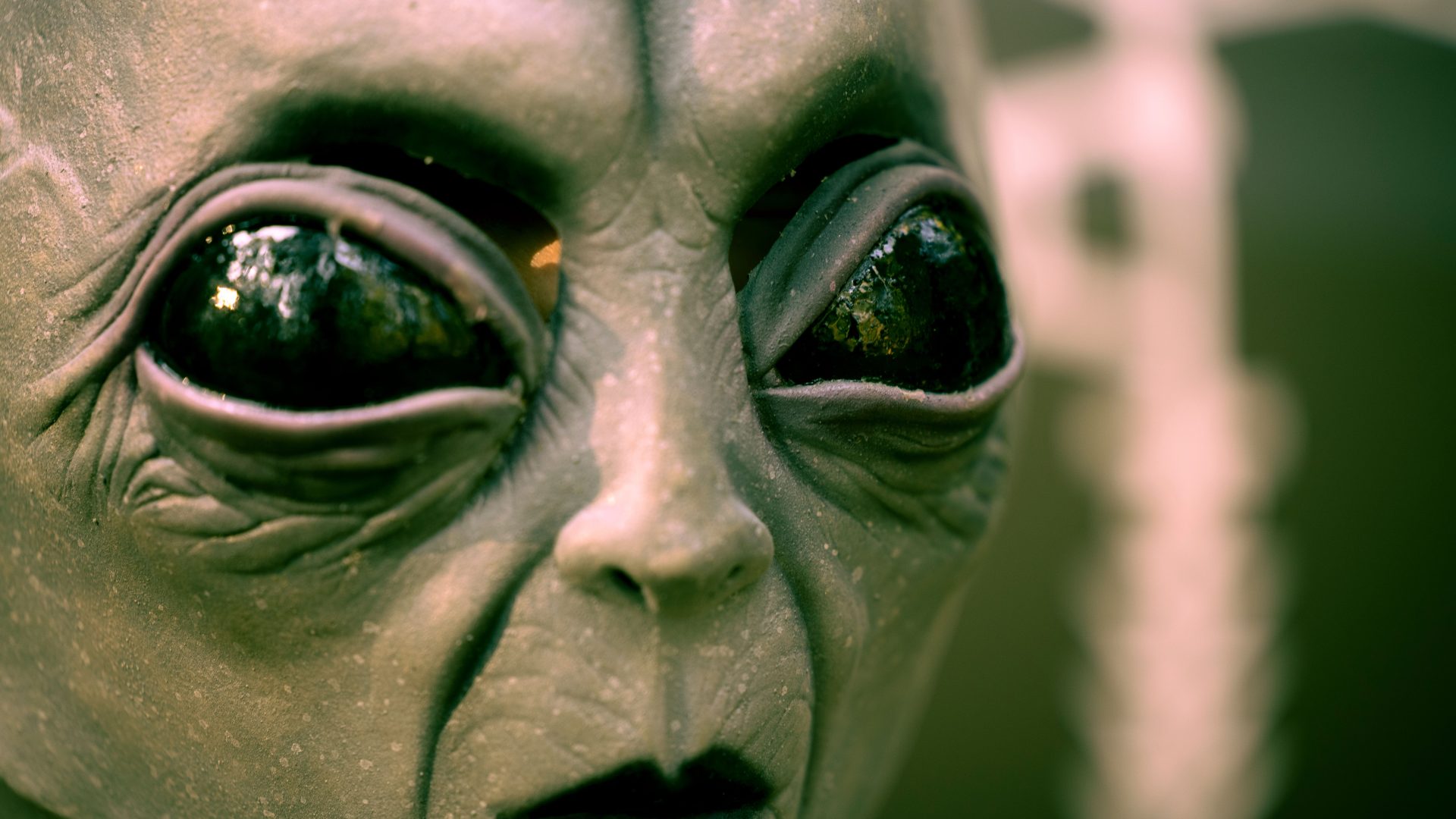
The Paradox of Belief: Why Is Believing in Aliens Perceived as More Ludicrous Than Faith in God?
In contemporary society, the spectrum of belief surrounding extraterrestrial life and divine existence often sparks compelling debates and, at times, perplexing societal judgments. Notably, individuals who express belief in extraterrestrial beings frequently face skepticism, ridicule, or are dismissed as eccentric. Conversely, acceptance of faith in God remains largely unchallenged across many cultures and communities. This dichotomy raises important questions about societal perceptions of belief, evidence, and reason.
The Vastness of the Universe and the Rationality of Extraterrestrial Life
Our universe is astonishingly expansive. Even within the bounds of the observable universe alone, astronomers have identified billions of galaxies, each containing billions of stars and potentially even more planets. Given this staggering abundance, the likelihood of intelligent life existing elsewhere is a topic supported by scientific reasoning rooted in probability and evolutionary theory.
Many renowned scientists advocate the idea that statistically, it would be extraordinary for Earth to be the only cradle of intelligent life. The Drake Equation, for instance, attempts to estimate the number of civilizations in our galaxy alone, and its results suggest that extraterrestrial intelligence is a plausible, if not probable, phenomenon. Therefore, believing in the existence of intelligent extraterrestrial life aligns with our expanding understanding of astrophysics and biology, making it a rational hypothesis rather than a flight of fancy.
The Evolving Relationship Between Science and Belief
Interestingly, as our scientific knowledge deepens, a significant number of top physicists and cosmologists tend to lean toward secular or agnostic perspectives. This trend indicates that as we uncover more about the universe’s workings—its origins, laws, and intricacies—some find less necessity to invoke supernatural explanations. Conversely, belief in divine entities often rests on faith, doctrinal teachings, or spiritual experiences that transcend empirical evidence.
It’s crucial to clarify that holding religious beliefs is a personal choice and often a vital source of comfort, community, and moral guidance for many individuals. The point here is not to challenge faith itself but to highlight how societal norms tend to accept religious belief while often dismissing extraterrestrial hypotheses, despite both resting on different foundations of reason.
Comparing Rationalities: Divine Faith Versus Extraterrestrial Hypotheses
From a logical standpoint, believing in physical extraterrestrial beings is at least equally reasonable as believing in a supernatural deity. Both concepts require a leap beyond direct evidence—one
0 thoughts on “It’s absurd that believing in aliens is considered more crazy than believing in God”