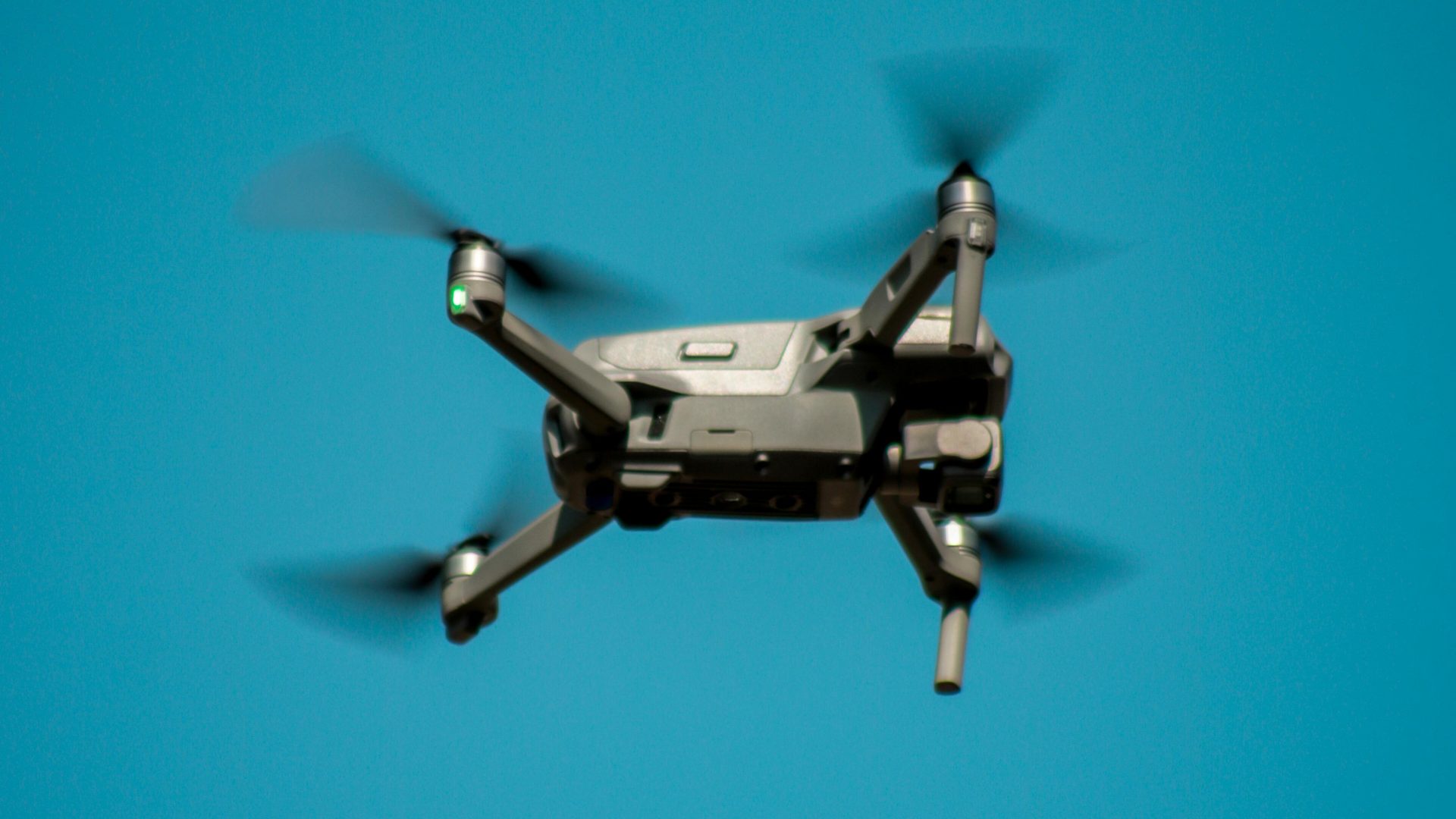
Understanding the Limitations of the “Chinese Drones” Theory: A Scientific Perspective
In recent discussions circulating online, some have proposed that certain unidentified aerial phenomena—specifically, “Chinese drones” and related craft—represent revolutionary advancements in technology. As an engineer and computer science researcher, I feel compelled to clarify why such claims lack scientific plausibility and do not withstand scrutiny based on established principles of physics.
Lack of Thermal Signatures Challenges Conventional Physics
One of the most striking features attributed to these craft, often referred to as “orbs” or “UFO-like objects,” is their apparent absence of heat emissions. Military and police reports, along with imaging evidence, confirm that these objects exhibit no detectable heat signature—no exhaust fumes, no visible frictional heating, and no thermal footprints. According to our understanding of thermodynamics, any object maneuvering through the atmosphere at high velocities would generate heat due to air resistance and engine operation.
The absence of heat emission suggests that these objects are operating with technology that fundamentally defies our current knowledge of physics. If a craft can fly without producing any heat, it implies an ability to produce infinite energy or conduct perfect energy conversions—concepts that are incompatible with the laws of thermodynamics, which govern energy conservation and entropy. Such technology would revolutionize physics and potentially allow for breakthroughs like limitless energy, essentially rewriting fundamental scientific principles.
Why Believe Such Technology Exists?
The notion that China possesses and is secretly deploying aircraft or drones capable of these feats across the globe is highly improbable. If even a minute malfunction or accidental loss occurs—such as a drone being shot down—the technology would be recovered and scrutinized, risking exposure of its capabilities. Governments worldwide, including China, maintain rigorous military and scientific oversight that would detect and intercept such advanced technology if it were existing at this scale.
Furthermore, deploying large, high-profile objects or drones over populated regions—such as New Jersey, Denmark, Germany, the UK, or Australia—would be extraordinarily risky. Any such craft would likely be tracked or intercepted by satellites or radar systems long before reaching its destination. The idea that this technology is being used irresponsibly or covertly, without detection, contradicts the capabilities of modern surveillance infrastructure.
Contradictions and Lack of Cohesion
Another point of contention is the distinction between various anomalous objects reported—some terminology suggests “orbs,” others “drones”—yet both are linked by the common trait of a lack of thermal signature. If these entities are
0 thoughts on “As an engineer, the “Chinese drones” theory is NOT plausible. Here’s why.”