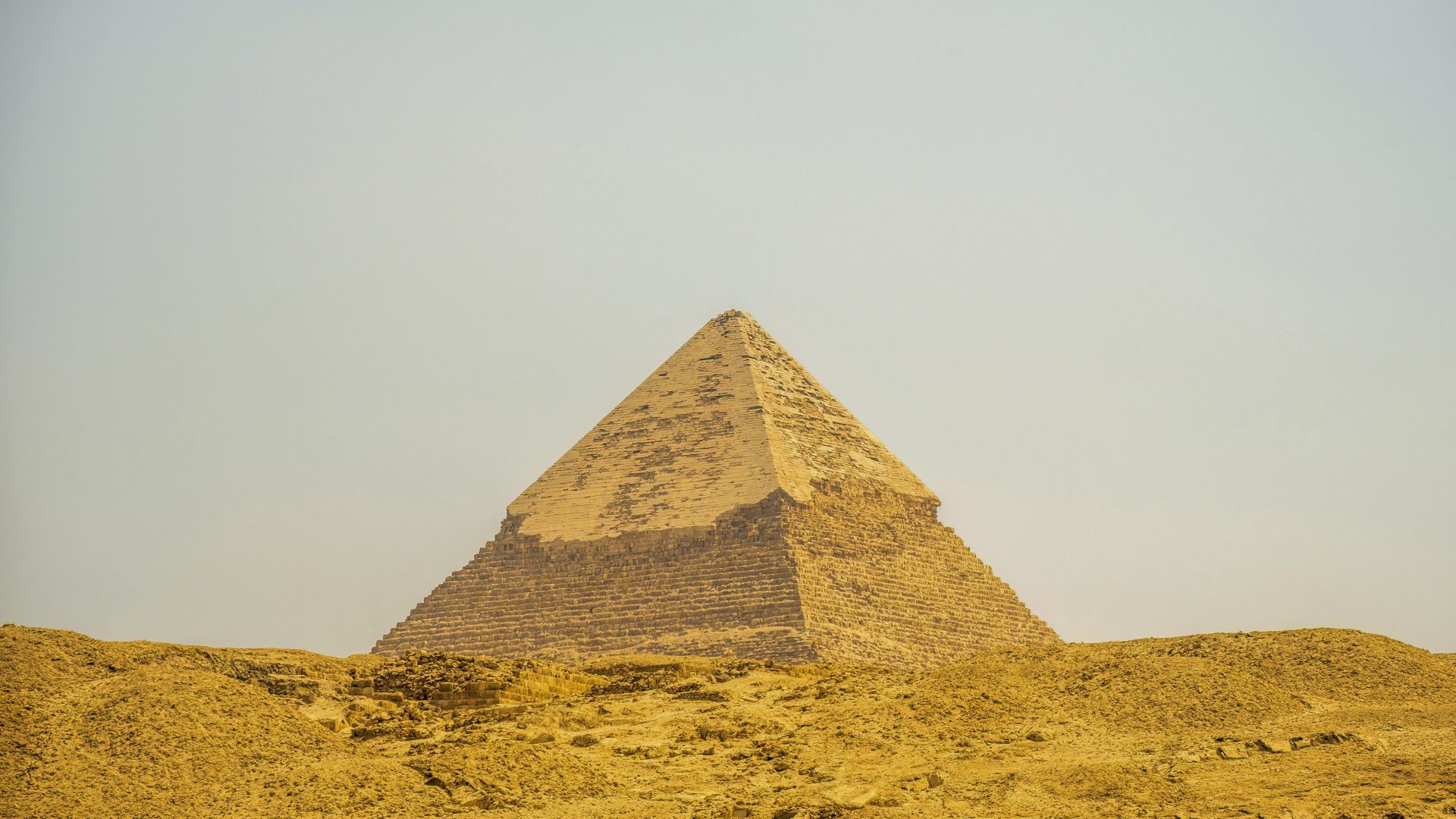
Exploring the Hidden Depths of Ancient Egypt: Satellite Scans Reveal Possible Site of the Legendary ‘Labyrinth’
Recent satellite imagery analysis has ignited renewed interest among archaeologists and history enthusiasts alike, suggesting the potential discovery of the legendary ‘Labyrinth of Egypt,’ a massive underground complex long shrouded in mystery. According to emerging reports, high-resolution scans indicate the presence of a substantial subterranean structure comprising approximately 3,000 chambers, possibly serving as an ancient library or archive.
One of the most intriguing features identified in the satellite data is a centrally located, freestanding metallic object approximately 40 meters in length. Its shape, described as resembling a Tictac mint, stands out against the surrounding terrain. While the precise nature and purpose of this artifact remain uncertain, its metallic composition suggests it could be of significant archaeological interest—perhaps a remnant of a technological or ceremonial object.
Historical accounts, notably from Herodotus, lend credence to the existence of such extensive underground chambers. Herodotus documented the presence of multiple layers of chambers—an estimated 3,000 in total—split evenly above and below ground, which were reportedly inaccessible to outsiders. He also mentioned that Egyptian caretakers refused to reveal the underground chambers, fueling speculation about their contents and purpose.
Despite the tantalizing evidence, official disclosures concerning this discovery have been limited. Historically, government authorities and Egyptian officials have been reticent to release detailed satellite imagery or findings related to such sites. Past attempts to conduct non-invasive scans beneath the pyramids and other ancient structures faced obstacles, including diplomatic pushback and restrictions under national security protocols. Such limitations have, at times, led to allegations of information suppression, hindering scientific progress and public understanding.
It is worth noting that artifacts and evidence suggesting that the ancient Egyptians may have constructed more sophisticated or extensive underground complexes than previously acknowledged tend to go underreported or are subject to speculation. Critics argue that such findings are often dismissed or kept from public view, possibly due to political or cultural sensitivities.
As interest in these discoveries persists, many hope for increased transparency and academic collaboration to explore Egypt’s true archaeological landscape. The potential uncovering of the ‘Labyrinth’ could reshape our understanding of ancient Egyptian civilization, their architectural capabilities, and their knowledge of subterranean construction.
For those keen to delve deeper into the details of this fascinating development, the full analysis and scans are available on the Labyrinth of Egypt project’s platform. The findings remind us that, despite centuries of exploration
0 thoughts on “Sattelites scans of Egypt may have revealed the location of the ‘Labyrinth of Egypt’, a massive, 3000 chamber library including a metal ‘tictac’ shaped object about 40m long.”