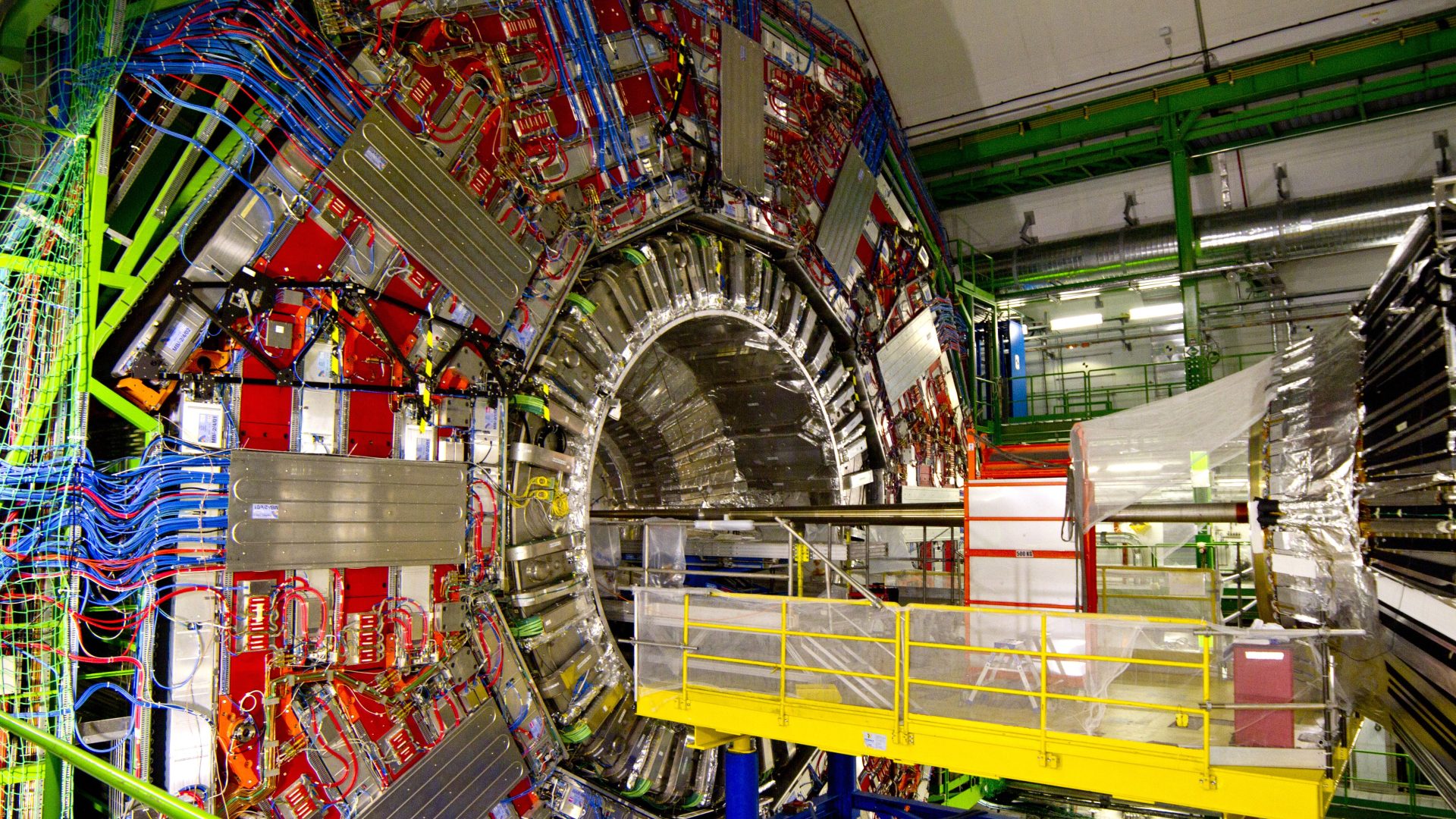
Could CERN Have Altered Our Reality? Exploring the Intersection of Physics and the Mandela Effect
Recent discussions have captivated the public imagination with the idea that advanced physics experiments may influence the fabric of our timeline. While claims of timeline disruptions may sound like science fiction, underlying scientific theories lend intriguing support to these notions. In this article, we delve into the physics behind these ideas, examine the phenomenon of collective false memories — the Mandela Effect — and explore how cutting-edge cosmological models could feasibly account for such mysteries.
The Mandela Effect: A Shared Anomaly in Collective Memory
Many of us have experienced moments when a well-known quote or event feels unmistakably familiar but turns out to be different upon closer inspection. A classic example is Darth Vader’s iconic revelation — many recall him saying, “Luke, I am your father,” yet the film actually delivers the line as “No, I am your father.” This discrepancy is a well-documented instance of the Mandela Effect, a term popularized by Fiona Broome in 2009 to describe collective misrememberings.
The phenomenon raises profound questions: Why do so many people share these false memories? Are these simply psychological quirks, or do they hint at deeper, perhaps even physical, anomalies? Supported by numerous anecdotal reports, the Mandela Effect challenges our understanding of memory, perception, and reality itself.
CERN and the Large Hadron Collider: A Gateway to Alternate Realities?
The European Organization for Nuclear Research (CERN) has been at the forefront of exploring fundamental particles and forces. Since its first beam in September 2008, CERN’s Large Hadron Collider (LHC) has undergone significant phases, including a notable incident in September 2008 involving magnet damage and helium venting, followed by a restart in November 2009. These events are thoroughly documented in CERN’s official records (source).
Some theorists speculate whether such high-energy experiments could inadvertently influence the fabric of spacetime. Could the intense particle collisions at CERN, aimed at uncovering the universe’s secrets, cause ripples or tears in the fabric of our reality? While mainstream physics considers these events safe and well-understood within the Standard Model, fringe theories propose that modifications at quantum levels might have macroscopic effects — perhaps even impacting the perception of history itself.
Theoretical Foundations: Brane Collision and the Multiverse
To
0 thoughts on “We Think CERN Broke the Timeline. Here’s Why the Physics Actually Supports It.”