Revelations from Satellite Scans Suggest the Existence of the Legendary “Labyrinth of Egypt”
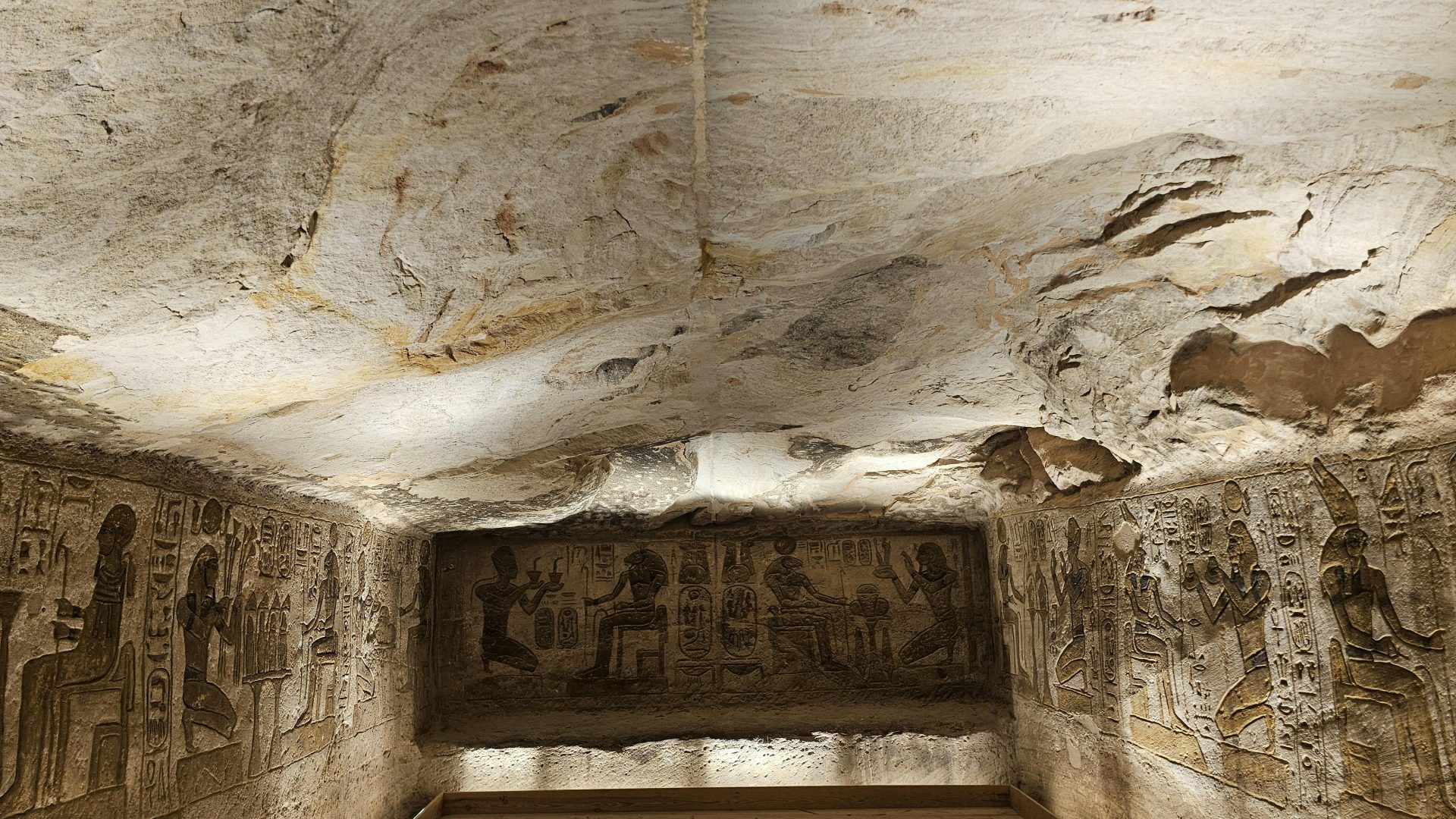
Recent advancements in satellite imaging technology have offered new insights into Egypt’s archaeological landscape, potentially unveiling the elusive “Labyrinth of Egypt”—a vast, ancient structure long shrouded in mystery and legend. A series of high-resolution scans have revealed what appears to be an extensive subterranean complex, estimated to contain approximately 3,000 chambers, alongside a significant metallic artifact.
Discovery Details and Significance
The satellite data indicates a prominent, centrally located, freestanding object approximately 40 meters in length. This feature appears to be composed of metal, which distinguishes it from the typical stone or wooden constructions commonly associated with ancient Egyptian architecture. Its elongated shape bears a striking resemblance to a Tic Tac mint, prompting curiosity about its purpose and origin.
According to historical sources, notably Herodotus, the ancient Greek historian, there are accounts of a grand labyrinth with multiple chambers. Herodotus described it as comprising “double sets of chambers, three thousand altogether, fifteen hundred above and the same number below ground.” He also noted that Egyptian overseers refused to reveal the underground chambers, fueling speculation about the extent of the site’s complexity and what remains hidden beneath the sands.
The Ongoing Quest for Ancient Secrets
Despite numerous archaeological efforts, much of Egypt’s extraordinary history remains concealed or inaccessible, hindered by modern political considerations. Government authorities routinely classify certain findings and restrict access to sensitive information, citing national security concerns. This has, at times, stifled scientific inquiry and the dissemination of potentially groundbreaking discoveries—such as the recent satellite scans.
Historically, previous satellite imagery investigations under the Pyramids yielded remarkable results, but researchers and explorers faced restrictions. Italian teams conducting scans beneath the pyramids, for instance, met with bureaucratic obstacles, and some researchers have been effectively barred from further exploration, raising questions about the transparency of Egypt’s archaeological community.
The Importance of Open Inquiry
The ongoing mystery surrounding the Egyptian labyrinth and related structures invites ongoing investigation and open scientific debate. Discoveries of this nature challenge conventional narratives about ancient Egyptian engineering and history, especially regarding the construction of the pyramids and other monumental sites. Skeptics argue that dismissing alternative theories outright inhibits a full understanding of Egypt’s archaeological richness.
As technological capabilities improve, researchers hopeful for a more open approach emphasize the importance of transparency. There remains a compelling desire within the global community of archaeologists, historians
0 thoughts on “Sattelites scans of Egypt may have revealed the location of the ‘Labyrinth of Egypt’, a massive, 3000 chamber library including a metal ‘tictac’ shaped object about 40m long.”