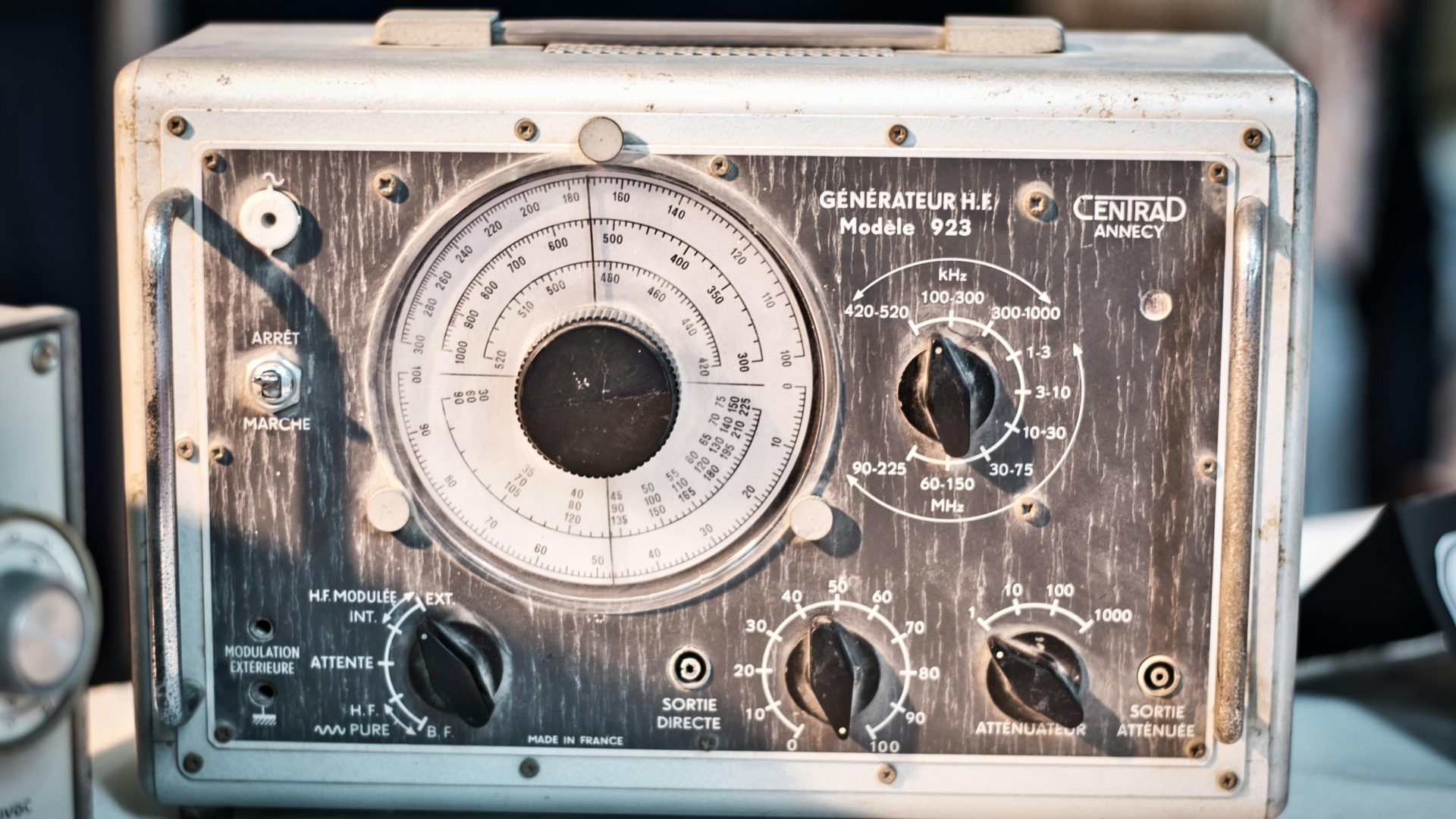
Exploring Recurring Anomalies in the Hydrogen Line at 1420 MHz: A Closer Look Beyond the “Wow!” Signal
The celestial mystery surrounding the famous 1977 “Wow!” signal has long captivated astronomers and enthusiasts alike. Traditionally regarded as a one-off anomaly, this brief, intense radio burst lasting just 72 seconds has been treated as an isolated event—an intriguing curiosity with no known explanation. However, recent reevaluations of historical radio data suggest that such phenomena might not be as isolated as once thought.
Historical radio observations and archived logs reveal multiple instances of short, ultra-narrow radio bursts detected within the same 1420 MHz frequency range over the past several decades. These signals, originating from deep-space antenna arrays and satellite dishes, were often dismissed as terrestrial interference or equipment artifacts. Yet, a closer examination raises questions: do all these bursts truly stem from human-made interference, or could some originate from natural or even extraterrestrial sources?
The 1420 MHz frequency holds special significance in radio astronomy. It corresponds to the hydrogen line—the spectral emission from neutral hydrogen atoms, which serves as a fundamental marker in the universe’s fabric. Because hydrogen is the most abundant element, this line is often considered a “universal channel,” a quiet and stable segment of the spectrum ideal for interstellar communication searches. Unlike typical interference, which tends to generate messy, broadband, or scattered signals, the bursts observed in this frequency are notably sharp and structured.
What makes these signals particularly intriguing is their behavior:
- They appear only during specific temporal windows and then vanish.
- Their occurrence lacks a discernible repeating pattern.
- The signals exhibit a level of structure that is uncommon for commonplace interference.
While faint signals are a common feature of deep-space observations, the presence of structured, narrow-band bursts that behave in this consistent yet unpredictable manner cannot be easily attributed to random noise or terrestrial interference alone.
The question arises: are we witnessing signals passing by only once in a long cycle, or are we missing a pattern that might unlock new understanding? The fact that numerous anomalies have been documented over decades, often dismissed or overlooked, suggests that there may be more to these signals than simple interference.
Although this discussion does not confirm extraterrestrial origins, it encourages a critical reexamination of existing datasets. By analyzing historical logs and current observations, researchers can better distinguish between true anomalous signals and benign interference.
Has anyone in the scientific community or amateur radio enthusiasts explored similar datasets? What insights might
0 thoughts on “The 1420 MHz Signal That Shouldn’t Exist… but It Happened Again”